Saturday, February 24, 2007

Pouilly-Fuissé - What'd you Say?

OK, enough whining and complaining about bad wine, bad expensive wine in restaurants, and bad wine tasting. Back to actually learning something about wine.

Today's lesson is on wine pronunciation. Most wines come from (or at least originated) someplace other than America. Strange, weird places with frighteningly unpronounceable names like "France", "Germany" and "Italy". As a result, wine names and other wine terms are usually in some indecipherable foreign language like "French", "German" or "Italian". Typical of such uncivilized cultures, none of these barbaric peoples know how to properly pronounce their own language.

That's where I come in. My purpose here is to begin to provide a guide to wine pronunciation. Not that I actually know anything about foreign languages. I grew up in San Diego (sandy AY-go) and still pronounce baja “ba-ja”. But I'm betting that, not knowing any better, you'll pronounce things however I tell you to. That ought to be worth some laughs when you pronounce Pouilly-Fuissé as “poo-yay fwee-SAY”. Like any real wine term has the word “poo” in it! “Hahahahaha!! He said ‘poo'!! What a moron!”

I've already taken the French to task about their pronunciation, but the more I learn about wine, the more I've come to realize that French might actually be the easiest of the major wine languages. Sure, at first it doesn't make any sense, but once you learn the rules, French is very consistent. If you know the rules, you can properly (as properly as any cretinous, knuckle-dragging American can) pronounce any French word. And French doesn't have many mouth-filling tongue twisters like “trockenbeerenauslese” or “Montepulciano d'Abruzzo”.

So what are the rules to pronouncing French? Well, like I said, I'm no expert (and I'm sure I'll hear from everyone who actually knows how to speak French), but I'll share what I've learned about pronouncing French wine terms.

If a word ends in a consonant, you typically don't pronounce it.
Petit Verdot = Peh-TEE Ver-DOE
Pinot Gris = PEE-noh GREE
This is true even for words ending in “s”.
Graves = grahv
Côtes-du-Rhône = Coat doo RONE
However, there are exceptions, though I'm not sure what the rules are governing them.
Pomerol = paw-mer-AWL
Pinot Noir = PEE-no NWAHR
The letters “eau” and “eaux” are both pronounced as “oh”.
Bordeaux = bor-DOH
Chateau, chateaux = sha-TOH
Double “l” is pronounced as “y”, somewhat like Spanish.
Pauillac = pow-YAK
Sémillon = say-mee-YAWN
The letters “ch” are always pronounced as “sh”, NOT a hard “ch” like in “chair”.
Chardonnay = shar-doh-NAY
Chenin Blanc - SHEN-an BLAN
The letter “e” at the end of words isn't typically pronounced unless it has an accent on it.
Grenache = gruh-NAHSH
Sancerre = sahn-SEHR
Pouilly-Fumé = poo-yay foo-MAY
The letters “ier” are pronounced “yay”. Yeah, like that makes sense.
Viognier = vee-own-YAY
Sommelier = so-mell-YAY

OK, so quiz time! See if you can properly pronounce the following words (answers at the end of the column):
  1. Pinot Meunier
  2. Sauternes
  3. Chateauneuf du Pape
  4. Bouteille
  5. Chablis
  6. Beaujolais Nouveau
Oh, and Pouilly-Fuissé? It really is pronounced as poo-yay fwee-SAY. Really. I swear.

Homework

Today's homework is simple. Try a bottle of French wine. Sure French wines (like top-notch Bordeaux) can be astronomically expensive, but they aren't all unaffordable. But remember, just as with California wine, you typically get what you pay for.

Sadly, there are few places in Chico with any kind of selection of French wines. Creekside Cellars has a few lonely bottles, but not near enough (hint, hint). The best selection, poor as it is, is at Cost Plus World Market.

Answers (Note: print upside down at the bottom of the column):

1. PEE-no moon-YAY; 2. saw-TURN; 3. sha-toe-noof doo POP; 4. boo-TAY (“shake your bouteille, shake your bouteille”); 5. sha-BLEE; 6. boo-zho-LAY new-VOH

Wines of the Week

2003 Guigal Côtes-du-Rhône

Côtes-du-Rhônes are the poor brothers to top Rhône Valley wines, like Chateauneuf du Pape and Côte-Rôtie. I've yet to find a Côtes-du-Rhône that I've fallen in love with – typically, I find them a bit on the thin side. But they're a real bargain compared to other Rhône wines. This wine started out a bit thin, but after two hours of decanting, it was nearly as good as the Chateauneuf du Pape, listed below. Intense honeyed aromas, and a great explosion of floral, honeysuckle flavors. Definitely needs decanting. For the price, it's totally worth trying, and it's definitely different than your typical California fruit bomb. Available at Cost Plus for $11.99. 3.75 stars.


2003 Barons de Rothschild Reserve Speciale Pauillac

Ooh...a Lafite Rothschild! That's like a $400 bottle of wine, right? Well, hardly. The top Chateaux of Bordeaux have discovered what American wineries have discovered: you can sell several grades of wine under your label and make truckloads of money. Trust me, this wine has virtually no relation to their top label. This wine started with earthy aromas of damp cellar and stinky cheese, and developed into a wine with dark, dried fruits and an dried herb finish. Very Bordeaux. If you want to taste Bordeaux on a budget, you could do a lot worse. Needs at least an hour of decanting to reach its full potential. Cost Plus had a couple of different vintages of this wine. Though I haven't tasted it, I'd avoid the 2002 on general prinicples, since that was a terrible year in Bordeaux. Available at Cost Plus for $19.99. 3.5 stars.


2001 Guigal Chateauneuf du Pape

Ranked #41 of the top 100 wines of 2003 by Wine Spectator, this is one of the best wines I've ever had. Amazingly smooth, with sophisticated, yet understated fruit. A very complex wine that develops an incredible, mouth-filling floral character when decanted for a couple of hours. You've never tasted anything like this. If you've never had a serious wine, this is a great place to start. It's a waste of time to drink this wine without decanting it. It needs two hours of decanting to reach its peak. Hard to find, but available at Creekside Cellars for $41.99. Ouch! – but worth it. 5 stars.

Thursday, February 15, 2007

Whine Tasting

Anyone who has made a trip to Napa – or even Lodi – knows about the peculiar phenomenon called “wine tasting”. In places like Napa, wine tasting is not too different from bar crawling, but instead of staggering from bar to bar on foot, you stumble from winery to winery by means of your three ton, but less than steadily navigated, SUV. I’ve often felt that the more popular wine roads would make easy pickings for the local constabulary, but you never seem to see any police lying in wait. I’m sure the local Chamber of Commerce takes a dim view of tourists, happy on the local joy juice, spending an unhappy evening in the local drunk tank.

Some areas just don’t seem to be good places for tasting rooms. Napa’s mostly OK, since most of the wineries are on the valley floor and the roads are reasonably straight. But if you head up to the Sierra foothills south of Placerville it’s a different story. First of all, it’s all forest, so you have no idea where you are half the time. But the main problem is the windy roads. You have to wonder about the wisdom of promoting regional “wine trails” where fleets of tipsy tourists have to pilot their gleaming Hummers down windy, narrow country roads.

Once you actually get to a winery and manage to park without knocking over the geraniums, you probably enter the tasting room with every intention of leaving even more blotto than you were when you entered. And I think that’s my main problem with wine tasting. Wine tasting is a strange sort of hypocritical ritual. You go up to the fancy bar, ask what they’re pouring and then – if you’re like most people – you just slug down whatever swill they give you. Nobody spits. Few people swirl or smell the wine. They just knock it back, and all the while it’s all presented as some kind of highbrow experience.

As a wine snob, getting hammered on free hooch isn’t really what it’s all about. Us wine snobs are, for some crazy reason, actually interested in wine “appreciation”. Unlike your average wine tourista who seems to just want to get a free buzz, wine snobs want to experience and understand every aspect of a wine, from it’s color and density, to its aromas, and finally to its tastes and textures.

Yeah, I know, you’re playing the world’s smallest violin. I guess I just wish more people would pretend to actually be interested in the wine instead of just it’s alcohol content.

But I do have to say that I truly enjoy wine tasting at winery tasting rooms, particularly in less known – and less crowded – areas like the Sierra foothills or parts of the central coast.

Napa isn’t even on my list of places to visit any more for a number of reasons. It’s too crowded. It’s too glitzy. They charge exorbitant fees for tasting (up to $25 for a “basic” tasting – even more for a “reserve” tasting of their better wines!). The people pouring the wine are usually hired hands who know next to nothing about the wines. To me, that doesn’t add up to a great wine tasting experience.

On the other hand, in many of the lesser-known regions, you might be the only people in the tasting room. Tastings are almost always free. And very often you find your glass being filled by the winemaker him- or herself, instead of some ignorant part-time employee that who only knows whatever spiel they were trained to regurgitate on demand. There’s nothing like learning about a wine from the person who made it. It’s the highlight of the visit to any winery. I’ve met some truly wonderful people at wineries – and tasted some fascinating wines.

If you haven’t been wine tasting at a winery, you must try it. But please remember that there’s no shame in spitting (particularly if you’re driving). In fact, you can claim that you’re a world famous wine expert. Somebody might actually believe you.

Homework

I’m going to start a new section to this column: homework. Oh boy!! Each week I’m going to give you something to do. Most weeks, it will be pretty harmless. It will almost always involve drinking wine. How bad could that be?

This week’s homework assignment: Go taste the wines at the New Clairvaux winery in Vina (www.newclairvauxvineyard.com/). The New Clairvaux winery is part of the New Clairvaux Abbey, just off Highway 99, about 15 minutes north of Chico. I’ll probably do an entire column on New Clairvaux sometime, but suffice to say that they are at present the best local winery (yes, there are several). New Clairvaux is absolutely worth a visit. The monks are very nice, and if you’re lucky, winemaker Aimee Sunseri will be there giving tours and barrel tastings.

Monday, February 12, 2007

Stuck in Lodi

Ever since Creedence Clearwater Revival sang about being penniless in Lodi, the sleepy farming town of Lodi has had a bad rep. But Lodi is one of the biggest wine producing regions in the state, and has over 100 years of wine growing history, stretching back to the heyday of the Flame Tokay grape. Even today, the Lodi area produces more wine than Napa and Sonoma counties combined.

But in the wine industry, as in the music industry, Lodi’s reputation has not fared well. Known as the northern capital of the bulk wine industry (Modesto is the southern capital), Lodi is home to Sutter Home and Woodbridge. Lodi has justly earned a reputation as a cheap wine Mecca.

But all that's beginning to change - or so I keep hearing. Lodi is the new boutique wine capital, with small wine makers popping up everywhere. Suddenly, poor old disrespected Lodi, butt of hick farming town jokes, is hip. Even the stodgy old AAA is blowing Lodi's horn, with a cover article on the Lodi wine country in a recent issue of their member magazine. Well, anyone who knows me knows that I'm all about what's hip. If the AAA, with its geezer drivers, thinks Lodi is hip, then I must really be missing the boat! So, I hopped in my AAA-insured Mercury Grand Marquis and tooled down Highway 99 to find out.

Downtown Lodi is actually pretty cute - if you can tell much on a Sunday morning when the only thing open is the Starbucks. But they've obviously put a lot of effort into revitalizing the central downtown area; brick intersections, nice streetlights, even a few fancy restaurants - all make downtown Lodi actually fairly appealing to look at.

But downtown is not where the wine action is in Lodi, so off I headed to the north end of town and the Lodi Wine & Visitor's Center (www.lodiwine.com). The Visitors Center is a nice new building that looks like a cheap knockoff of a Napa Valley winery. Inside, there are a few rather lame exhibits. The real draw is the "wine shop" which is really a large tasting room. The people pouring wine were very nice, but I made the mistake of saying that I was interested in wines with subtlety and complexity. Our pourer just laughed. "You came to the wrong place," she said.

Boy, was she right. None of the wines we tasted were even halfway interesting. Not a great start, but it was early and we had a lot of wineries to hit. Back on the road, swerving slightly now, we headed for the best-known wine maker in the region: Michael-David. Never heard of them? OK, how about "7 Deadly Zins"? "6th Sense Syrah?" "Earthquake Zin?" Michael-David makes them all.

And the place was mobbed when we got there. The tasting bar looked like a dead zebra surrounded by feasting vultures. People were literally elbow-to-elbow fighting for space. When we finally poked and jabbed our way to the bar, we decided that this stuff must be damn good, so we went whole hog and paid to taste their full line of wines, from the cheap stuff all the way up to their $30 a bottle flagship cab.

Words can't describe how bad these wines were. As we were learning, the Lodi "style" of winemaking means producing over-heated, over-cooked, and over-oaked fruit and booze bomb wines. These are wines with no finesse, no originality, no character, and no creativity. Sadly, these were about the best wines we tasted that day.

Our last best hope to taste some decent wine was at the Vino Piazza in Lockeford, about 15 minutes east of Lodi. This former bulk winery has been converted into homes for about a dozen boutique wineries. Dutifully, we went from tasting room to tasting room, trying to find a way to gag politely on the vile concoctions we subjected ourselves to.

By the end of the day, I realized that the wines in Lodi all have virtually the same two deadly flaws.

First of all, the grapes are over-ripened to try to get the most fruit flavor and alcohol out of them. What happens when you leave grapes in the sun too long? That's right, you get raisins. And nearly every Lodi wine we tasted had a strong raisiny or cooked flavor. That’s fine in a port, but it’s a serious flaw in a cabernet.

And what do wine makers do with flawed grapes? They try to cover the flaw with lots and lots of oak. Used in moderation, oak can mask minor flaws in a wine. But if a little is good, more is definitely not better. Drinking these wines was like sucking on an oak 2x4 dipped in wine.

But the real problem is that people love this stuff and down it like water. I have a problem with that. Maybe I was wrong in my last column when I said "we’re not as stupid or ignorant as you think". Maybe we are. Wine - good wine - is fun. It's an incredible world of tastes, flavors, styles, people, places, and most of all, infinite variety. But bad wine is just a way to get drunk.

You don't have to drink bad wine, and you don't have to think that bad wine is good. And most of all, you don't have to pay $30 a bottle for good wine. I’m going to keep trying my damnedest to prove that to you. Just don't get stuck in Lodi.

Sunday, February 04, 2007

The Truth - 100% Ad Free

People occasionally ask me how I landed a gig writing this wine column. Was it my encyclopedic knowledge of wines? My finely honed writing skills? No, it was nothing like that. I got this job the Chico way: nepotism.

As a result, I never really bothered to actually read the paper or learn much about its editorial bent. I had a cush job with a fat paycheck, so what did I care? But for some reason (boredom), that changed this week and I actually flipped through the paper.

First thing I noticed was the editorial “poem” about the raise given to Dr. Zingg, President of Chico State. Suffice to say, it wasn’t flattering. Now, I actually really and truly know Dr. Zingg, so my point here is not to comment one way or another about the virtues of the poem. For the record, I have no opinion one way or another (I have a day job, and if you follow the org chart up far enough, his name and mine are connected, if you get my drift).

My point is to contrast that poem with what the Chico New & Review wrote about Dr. Zingg. Dr. Zingg is a nice guy – I know this from personal experience – but what the CN&R wrote could only be characterized as fawning. Their three-paragraph piece praised his leadership with words like “skill”, “flair”, “style”, “grace” and “sincerity”. Skill? Fine. But “flair” and “style”? He’s an administrator, not a hair stylist, for God’s sake.

Where the CN&R regularly fawns (I’m beginning to like that word) over local businesses and only pretends that it’s not salivating over another Walmart, the Beat regularly skewers self-important local business organizations and decries the imminent demise of Chico at the hands of the big box companies. Editorially, reading the Beat side-by-side with the “Snooze and Abuse” has been something of a revelation.

So what does this have to do with wine? Nothing per se. But I’m beginning to see the editorial differences between the Beat vs. the CN&R. The CN&R kisses up to everyone in Chico and gets tons of ads; some from obscure local businesses that I’m not sure actually exist. The Beat alienates everyone in Chico by trying to tell the truth and gets – at best – a dozen ads.

Cool. It’s all beginning to make sense.

I can alienate people, and I bet I can help get that ad count into single digits in the process. All it requires is telling the truth. For some reason, a lot of local businesses hate that. Let’s start with local restaurants.

Actually, let’s start with a chain restaurant to soften the blow a bit.

Last week for some inexplicable reason, my partner wanted to go to the Olive Garden. Normally we eschew such places in favor of locally owned establishments, but we were over by the Mall, it was a Monday, and Sierra Nevada and Kramore Inn were both closed.

Now, the Olive Garden just won a “Persons of the Year” award from Wine Enthusiast magazine for their efforts to educate Americans about wine by offering a “wide” selection of wines as well as giving free tastes of wine to every customer. Laudable…at least until you take a look at their wine list.

Remember the column I did on the really, really, really cheap stuff? Yeah, the one where I drank Thunderbird. Well, Olive Garden carries the worst of the wines I tasted. That’s right, they feature the Riunite Lambrusco right on the menu - the stuff that I said smelled like “an intriguing combination of raspberry fruit rollups and paint thinner”. It sells for $2.99 a bottle at Albertsons, but the Olive Garden has the huge hairy balls to sell it for $4.50 a glass, or $15 for a bottle! That’s a 400% markup! 400%!!! For crap that makes better furniture polish than wine!

And you know what? The Olive Garden isn’t that different from any other restaurant in Chico. I know that I’ve bitched about this before, but the biggest rip off in town is a bottle of wine purchased at any “fine dining” establishment. No matter how bad the wine is, you’re going to pay 100% to 300% markup in virtually any restaurant in town. It’s complete highway robbery.

Most restaurants in this town assume that you’re a wine idiot (you certainly are if you buy a bottle from them) and offer crap, generic, boring wines at usurious, outrageous prices. Come on! I can buy Sterling Vineyards and Beaulieu in the grocery store! Offer me something I can’t get elsewhere, and offer it to me for a price that makes me want to try it!

Quit being lazy and quit buying your wines at Costco. Learn something about wine dammit, and offer us some interesting, good wines, at good prices! We’re not as stupid or ignorant as you think. Sure, Chico’s a hick town where franks and beans are considered haute cuisine, but not all of us are ignorant of wine. And we’re not going to let you rip us off.

So, what can you do to throw Chico restaurateurs up against the wall? I’m glad you asked.

  1. Get educated. Go to a restaurant and take note of their wine list (or look it up online). Then find out what their wines retail for. The next time you eat there, tell them exactly what their wines cost retail and exactly where else you can buy them in town. Straight out tell them their wines are over-priced and that you know it.
  2. Bring in a bottle of wine that’s on their list and ask to pay only the “corkage” fee. Typically, restaurants charge $10-15 to open a bottle you bring in. But if you bring in a bottle that they sell, odds are that they’ll make much less on the corkage fee than they would selling you the wine. They really, really HATE this. They may get nasty if you try this, but it sends a message.
  3. Bring a bottle of Two Buck Chuck. Sure, paying the corkage on a bottle of Trader Joe’s finest will turn it into a $14 bottle of wine, but that’s still cheaper than what you’d pay for a bottle of the generic swill they’re selling. And nothing sends a clearer message than Two Buck Chuck.
  4. Bring a bottle of something that you like, happily pay the corkage fee, but make a point of telling them that you’d love to buy off the list if it had anything interesting or reasonably priced on it.
  5. Ask them why they don’t carry your favorite wine, French wines, Italian wines, local wines, anything other than the generic garbage they get from some distributor. Tell them you’d appreciate it if they expanded their selection. Be specific about what you’d like them to carry, so they know that you know what you’re talking about.

This Valentine’s Day, my partner and I are going to Spice Creek. But we’re bringing our own bottle. I haven’t even looked at their wine list, and honestly, I’m pretty sure I don’t have to. So be forewarned, Spice Creek, when you see that bottle of Chateauneuf du Pape come in the door, and remember that I personally know the president of Chico State!

Sunday, January 28, 2007

The $10 Threshold

This is my last week torturing myself with cheap wines. For the most part, it’s been money – and wine – down the drain. But I’ve learned that there’s a major difference between the really, really, really cheap stuff (less than $4 a bottle) and the really, really cheap stuff ($4-6 a bottle). But it gets a bit less clear when moving from the really, really cheap stuff to the just-one-“really” cheap stuff ($6-10 a bottle). Some $9 wines weren’t significantly better than the $4 stuff.

Of course, to a wine snob like me, there’s a certain “duh” factor involved in a statement like that. For us wine snobs, $30 is the threshold where we start to think that we might occasionally find a decent bottle of wine. That’s why there are two types of wine snobs: rich ones and broke ones. If you drink two or three bottles a day like I do, it really starts to add up!

For normal people and people with other kinds of drug habits, 30 bucks a bottle is a bit steep. For them, you hit a big psychological threshold when the price of a bottle goes from $9.99 to $10.00. “Whoa! There’s an extra digit there! I don’t know if I’m willing to pay $10 - $10!!! – for a bottle of wine! It better be damn good!”

People expect that extra penny to make a big difference – and wine makers know it. With that in mind, I myself was expecting to finally drink some decent wines this time around by picking bottles in the $10-15 range. In order to maximize my consumer-spending dollar, I decided to take a trip to Costco; the over-sized home of over-sized boxes of over-sized food sold to over-sized Americans.

Given my limited funds (yeah, I’m one of the broke wine snobs), I decided to only get three bottles, and I decided to pick wines that I thought had a pretty good chance of being worth it.

Andrew Murray 2005 Tous les Jours Central Coast syrah ($12.69)
Andrew Murray is the label that Sideways made famous. On the nose, a decent mix of dark blackberry fruit and a bit of earthiness, but overall the nose was a bit weak. On the tongue it had a faint but pleasant perfuminess to it. However, the fruit was not very strong and the wine was a bit hot on the finish, with a fairly strong taste of alcohol. A decent, drinkable wine, but a bit on the simple side and a bit disappointing. 3 stars.


Rodney Strong 2003 Sonoma County Cabernet Sauvignon ($10.99)
This wine was recommended to me by a friend whom I consider to be a connoisseur of cheap wine. Pretty darn decent nose right out of the bottle. Really heavy dark blackberry fruit, with a lot of spiciness. Very impressive for the price. The first taste packed a real whammy of tartness, but that faded quickly, giving way to solid spicy fruit and decent tannins. A solid effort. Revisiting the wine after it had been open for about an hour was a mistake. Suddenly, tons of oak leapt out of the glass, followed by an off, almost metallic finish. This is one wine to avoid decanting. 3 stars.


Chateau Souverain 2003 Alexander Valley Cabernet Sauvignon ($14.99)

This one was right at the top of my price range (and probably $18.99 anywhere but Costco), and by God, it was the only one to really come through. Solid dark fruits on the nose like you expect with a Cabernet. On the palette, really just yummy compared to the swill I've been drinking. This was the first wine I'd tasted in weeks that actually had some complexity and structure. Hallelujah, brother! And it just got better the longer it was open, developing more complexity and deep flavors. 3.75 stars.

Now that my crusade is complete, I have no idea what to write about next week. But fortunately, I have a whole week – and 15-20 bottles of wine – before I have to do anything about it.

Sunday, January 21, 2007

Moving up or Just Costing More?

If you've been following this column you know that I'm on a crusade to discover the price point where I will actually get to taste a decent wine. To my amazement, I actually came close last week with that drinkable little Woodbridge merlot. If that keeps up and I hit pay dirt this week, I may chuck all of my Bordeaux in the trash and switch to stuff that's a tenth the cost!

I'm really getting into this cheap wine thing. Don't ask me why – the wine snob in me is cowering in a corner sucking his thumb and crying quietly – but the idea of trying a bunch of cheap wines and maybe finding a diamond in the bargain bin has me all hot under the collar. Plus, I get a "reason" to pop four bottles of wine in one night. The downside is that I usually don’t remember much of the tasting the next day and have to make up a bunch of BS to keep my editor happy. Whatever.

Anyway… on with the tasting!

This week I bought four wines that you should be able to find at any grocery store. I picked mine up at Cost Plus.

Blackstone 2005 Monterey County Chardonnay

This wine didn’t actually have a whole lot of aroma – a bit of butter, but not much else. On the palette, it was actually almost flavorless, but, boy, it sure did go down smooth. They finally made something flavorless that has 13% alcohol! Served cold, you could get pretty happy on this stuff, but if you’re actually interested in wine, give it a miss. Honestly, the Gallo chardonnay I had last week was just as good. Pathetic. $8.99. 2 stars.


Yellowtail 2005 Shiraz
As soon as I saw this bottle, I knew I had to buy it. Not only was it easy on the wallet at $5.99, it’s the one wine every single person on the planet has had. On the nose it wasn’t very impressive; a bit oaky and slightly sour, but not horrible. On the palette this was easily the most interesting wine of the bunch. Very floral and perfumy, in a very pleasant way. Smooth. You typically expect an Australian shiraz to have a lot of fruit and pepper, but this one didn’t. Bottom line: this was the only wine I didn’t pour down the sink afterward. 3 stars.


Ravenswood 2003 Vintners Blend California Zinfandel
Ooh… “Vintners Blend”. That must be the good stuff! Actually, “Vintners Blend” is the cheapest stuff Ravenswood makes. “Vintners Blend” is pure marketing for people who know nothing about wine. Yeah, I’m talking to you. Ravenswood is famous for its Zins, but this ain’t one it’s famous for. Too much charred oak on the nose, and bit cooked tasting. Bleech. $6.99. 1.5 stars.


Columbia Crest 2003 Columbia Valley Cabernet Sauvignon
I’d never had a Columbia Crest wine before. As a California wine snob, I figured that this was just cheap wine, and why drink something from Washington when I could drink something from California that was probably just as bad. Amazingly, this wine had no aroma whatsoever. I mean, even the really cheap stuff smells like something, even if that something is lighter fluid and carpet cleaner. When I buy a bottle of wine, I want it have some sort of smell. Anything will do. But try as I might, I couldn’t suck any smell out of this. The taste was no great shakes either; a bit of oak and some faint fruit. A pass. $8.99. 1.5 stars.

What’s the story here? With the exception of the Yellow Tail, these wines were actually worse than the cheap crap I drank last week. And most of these wines cost about twice what the Woodbridge and Sutter Home cost. Damn! I need to do a better job making up the garbage I put in this column.

Next week: I ask for a raise because I’ll be moving up to the $10-15 a bottle stuff. Ooh-la-la.

Monday, January 15, 2007

Moving Up in the World

Why am I doing this? I keep asking myself that. I actually went out to the grocery store and bought a shopping cart full of cheap wine. I mean, the Franzia and Boone's Farm were bad enough, but I bought a whole basket full of Woodbridge, Sutter Home and Gallo wines as well. That's just plain humiliating for a wine snob like me. It's like Brad Pitt getting caught buying low-grade crystal meth in some alley in downtown Oroville. A guy like that, you'd think he could afford the good stuff - and have a taste for it. Thank God no one recognized me!


Even worse, now I actually have to taste them. The sacrifices I make for this column simply boggle the mind.

Fortunately, I prepped myself for the task by spending a weekend tasting wine in Lodi. Poor Lodi , the butt of Credence Clearwater Revival songs and any number of jokes about hick valley towns. But, based on my wine tasting experiences last weekend, it deserves every joke and every slight tossed at it. Never have so many bad wines been served to so many people in such a small town. But it was a good experience because it lowered my expectations to such a level that I might actually feel blessed to drink Gallo.

Gallo Twin Valley Chardonnay (non-vintage)
After the huge oak bombs that I had in Lodi, this was actually a semi-refreshing change. Cheap chardonnays are known for two flavors: butter and oak. Interestingly, this wine actually bucked that trend. Though it definitely had some oak, it didn't crack me over the head with a two by four. Don’t get me wrong, this wine weren’t nothing special, but it weren’t hideous neither. Actually, for the price – and to my astonishment – this wine was actually drinkable. 2.5 stars.


Woodbridge 2004 California Merlot
I’m not a merlot fan, and not because of the movie Sideways. I couldn’t care less what some actor spewing some piece of dialog says. But the fact is that merlot makes some of the wimpiest, “blah” wines in California, pathetically generic stuff that could be anything and tastes like nothing. Sure, merlot makes some of the best wines in the world, but in California, it’s hard to know what you’re getting until you taste it.

Well, this little wine actually puts out – relatively speaking. Sure, it’s got a fair amount of oak to it, but nothing obnoxious or over the top. But peeking through that (and its low class pedigree) is a wine that almost – almost – has some real character. Again, a stunner. 2.5 stars.


Sutter Home 2002 California Cabernet Sauvignon
I’m not sure what the deal was with this wine. They tend to push the vintages on these cheapo wines pretty fast. Two years is about as much lag time as these producers can handle (partly for marketing reasons, but partly because their wines begin to self-destruct after a couple of years in the bottle. Chateau Latour this stuff ain’t.). This wine was a 2002 and must have been collecting dust on the store shelf for at least two years. And it seemed to be showing signs advanced age. It wasn’t actually bad; it just lacked any sort of character or body. A weak, but not seriously flawed wine. 2 stars.

Sadly, these three wines were among the best I tasted this weekend, and that makes me a bit leery of recommending any of them. The best bad wine is still a bad wine after all. I’d only feel safe recommending these if you’ve been drinking Franzia or Almaden - you poor, poor soul. Amaziungly, these wines actually represent a huge, gigantic step up from box wines, and are worth every penny of it. I honestly never thought I’d hear myself say anything remotely like that. Writing this column brings me to a new low every week.

Next week I’m going to move up the scale to $9-10 per bottle wines – the stuff you might find in Cost Plus or Costco, and probably what you consider the “good stuff”. Some day, I’ll actually drink a real wine for this column. And you’ll all send me hate mail. Sigh.

You can see me taste this week’s wines at: http://www.youtube.com/watch?v=Fh_6tLe22aQ

Thursday, January 04, 2007

The Good Stuff

My editor is a very nice and thoughtful guy. So nice and thoughtful that he got me a bottle of wine for Christmas. A bottle of Thunderbird. No kidding, he really did. He even left the price tag on. $3.69. Nothing like a big spender.

A first, I thought, “ha ha, great joke!” But then I started wonder. Was he just being a wisenheimer or was he trying to send me a message? I mean, let’s face it, I’m writing this column for the Chico Beat – the operative word being “Chico.” Don’t get me wrong, Chico’s a nice place, but it’s hardly the most sophisticated city on the planet.

Maybe, I thought, my editor is trying to tell me to write my column at the level of our audience. Maybe I’ve been aiming too high with my fancy wine reviews and talk about how to spit properly. Maybe the people who read this column are spitting, but they’re spitting Copenhagen not cabernet. Instead of reviewing $20 bottles of wine, maybe I should be reviewing $12 boxes of wine.

So I bucked up my courage, headed to the nearest Stop ‘n’ Rob liquor store, and added some “popularly priced” wines to my collection of fine Bordeaux. Honestly, I felt like a complete hick when I brought my cart to the checkout counter, imagining the clerk (and everyone else in the store) sneering at me in derision. I slunk home to my single wide in shame and popped open these bad boys to soothe my hurt.


Thunderbird (Non-vintage) $3.69
At $3.69 for a standard 750ml bottle, the T-Bird is priciest stuff (per gallon) I tasted, and has the most alcohol at 17.5%. The aroma alone is enough to burn the hair off your chest, with overpowering waves of rubbing alcohol and citrus cleanser emanating from the bottle. This stuff smells like something you need a hazardous materials permit to buy. And that’s about how it tastes too. It hits you like cough syrup, dense, strong, sweet, and medicinal. In fact, this stuff probably makes pretty darn good cough syrup – at least after a few slugs you wouldn’t be feeling any pain. While the other wines left me confused as to what their purpose was, there was no doubt with Thunderbird: the purpose of this wine is to mess you up. 2 ½ barfs.

Boone’s Farm Strawberry Hill (Non-vintage) $2.50
Boone’s farm is the wine you probably drank when you were in high school. I’d never had it before, and the first thing I discovered was that it’s fizzy! It tastes like strawberry soda, and I can see why this stuff is popular with high school kids. But it’s just so overpoweringly sweet that it’s actually difficult to drink and leaves behind a sickly sweet aftertaste. 1 ½ barfs.


Franzia Sunset Blush (Non-vintage) $10.99 – 5 liters
This wine is the bargain of the bunch: nearly seven bottles of wine for $11. This stuff is light pink like the Boone’s Farm. Not much aroma on the nose, but it hits you over the head with almost toxic citrus flavors when you first taste it, almost like biting into a grapefruit rind. After that, the flavor turns hideously sour and leaves behind a God-awful aftertaste. 3 barfs.

Riunite Lambrusco (Non-vintage) $2.99
Of the four wines I tasted, this was the only one that actually looked like a real wine. On the nose, this wine has an intriguing combination of raspberry fruit rollups and paint thinner, but the flavor is just vile. It was so sour that I thought the wine was spoiled, but it was also sweet – not in a good way like sweet and sour pork – but in a bad, bad, disgusting way. I can’t imagine that people actually drink this stuff. This was far and away the worst of the bunch – hard to believe, but true. 4 barfs.

Conclusions
You people actually drink this stuff?!?! My God, for a dollar more a bottle you can move up to stuff at least has some vague resemblance to real wine! Heck, for $1.99, you can drink Two Buck Chuck! Anything has got to be better than these over-sweetened, sour, citrusy booze bombs.

Look, I’m going to do you a real favor. Next week, I’m going to taste the next level up – the $4 a bottle stuff – and I bet we actually go from “barfs” to “stars” in the process.

If you want to laugh while watching me trying to down this stuff, go to http://www.youtube.com/watch?v=3iGr51zHdHw.

Wednesday, December 06, 2006

Life is Demi-Sec

Christmas and especially News Years just scream champagne. Champagne with dinner, drunken champagne toasts to the New Year, and mind-bending champagne hangovers on New Years Day.

As a budding wine snob this is a crucial time of year for you. What better way to celebrate Christmas than to cut your snotty brother-in-law down to size by sneering at the bottle of André that he brought to dinner and giving a lecture on the differences between CO2 injection, charmat and méthode champenoise processes?

But before we get carried away, let’s start with the basics. The first thing you need to know about champagne is that "champagne" only comes from the Champagne region of France, near Paris (pair-EE). Everything else is a "sparkling wine". So when brother-in-law Bob refers to his bottle of André as "champagne", you can slice him into even smaller pieces.

But there are excellent sparkling wines from all over the world, not just France.

Italy produces some fine sparkling wines, referred to as spumante (spoo-MON-tee), including the infamously cheap asti spumantes. However, some of the best Italian sparkling wines are dry wines made from the prosecco grape. In Spain, sparkling wines are referred to as cavas. Most cavas come from Catalonia and use native Spanish grape varieties. And, of course, California makes its fair share of sparkling wines.

Now I grew up in Bob’s house. My parents bought basic André for “normal” special occasions and Cold Duck for the really special occasions. Until recently (like last week, when my editor suggested doing a column on “champagne”), I knew very little about sparkling wines other than they gave you kick ass hangovers. In fact, the high point of my sparkling wine career was when I was the “bartender” at my sister’s wedding and served bottles of Cold Duck out of a trashcan filled with ice. I was so sick from drinking that stuff that I literally wanted to die.

But if you want to do better than Cold Duck – and show up your brother-in-law – you need to know a little more about sparkling wine.

For one thing, sparkling wines come in varying levels of sweetness. The driest style of sparkling wine is referred to as “brut”. No way! Oh man, I always wondered what that meant! I always thought it had something to do with the strength of the wine, you know, “That sure is a brut of a champagne.” In fact, a brut is just a sparkling wine with little or no residual sweetness.

Next on the dryness scale is “extra-dry”, which really means “slightly sweet.” After that comes “sec” (literally “dry”, but actually somewhat sweet), “demi-sec” (“half-dry”, but actually pretty sweet), and “doux” (“really sweet”). Who came up with this stuff? Some drunk French guy. ‘Nuff said.

Sparkling wines may also say “blanc de noirs” or “blanc de blancs” on the label. This has to do with the grapes used to make the wine. French-style sparkling wines are typically made with some combination of pinot noir, pinot meunier (pee-No moon-YAY), and chardonnay grapes. Blanc de noirs (“white of blacks” – don’t go there) are wines made from the red pinot noir grape. However, the skins are removed soon after pressing, leaving a lightly salmon-colored wine behind. Blanc de Blancs (“white of whites”) are made from white chardonnay grapes and make very delicate light wines.

And what about that CO2 injection, charmat and méthode champenoise stuff that you used to chainsaw old Bobble-head Bob into little chunks? They have to do with how the bubbles get into the sparkling wine. The méthode champenoise (may-TOD sham-pen-NWAHZ) adds a second fermentation to the winemaking process that adds the bubbly to sparkling wines. This takes a lot time and attention, and produces finely carbonated wines. The charmat method is cheaper and faster and ferments the wines in pressurized tanks where the resulting CO2 is forced back into the wine. As cheap as this is, it’s still better than CO2 injection method, which is exactly what they do to Coca Cola to give it carbonation. Only really cheap stuff – like André – uses this method.

Next week I’ll review and recommend four sparkling wines for the holidays, each under $20 a bottle.

Tuesday, December 05, 2006

Sparkle, Sparkle Little Wine

Wines of the Week

Mumm Napa Blanc de Noirs (BLAN de NWAHR)

Blanc de Noir (literally "white of blacks") is a dry sparkling wine made primarily from red pinot noir grapes. However, the skins are removed early in the wine-making process, leaving a elegant light salmon color wine behind. This is a fine sparkling wine for the holidays or New Years. It's flavorful and full-bodied enough to stand up to the stronger flavors of a Christmas dinner, while delicate enough to not overwhelm the more subtle flavors. Hints of cherry and strawberry. Nicely balanced acidity. Available at CostPlus World Market for $13.99 and at Creekside Cellars. 4 stars.


Loredan Gasparini Proseco Brut (pro-SEK-koh)

Prosecco is a white Italian grape that is used to make slightly sweet or dry sparkling wines. This prosecco is completely dry. It has a very delicate color; in fact, it's nearly clear. Clear citrus aromas of grapefruit, lemon, as well as apricot. This is a very crisp, dry sparkling wine. It has a very strong flavor and feel of grapefruit, with the sharp, but pleasant acidity. Not overly complex but extremely refreshing. This would be excellent with a soft cheese like brie or camembert, or by itself on New Years Eve. Personally, I would buy a few bottles and put them in the back of the fridge and wait for July. This wine would be the perfect cold wine drink on a hot July day in Chico. $16.00 (a bargain) at Vino 100. 4 stars.


Chandon Blanc de Noirs

The Chandon Blanc de Noirs is a wonderful light sparkling wine. Unlike the Mumm Blanc de Noir, this wine lacks even a hint of pinkness, and is a very light and pure straw color. On the nose it's somewhat sweet and appley, with just a hint of lemon. On the tongue it has a bright acidity which makes it very refreshing. Citrusy, slightly grapefruity flavors come through. Actually, it reminds me of a nice Riesling more than anything else. This is a very refreshing and light wine, that I think everyone will like. Rated 87 points by Wine Spectator magazine. $12.59 at Costco. 3.5 stars.


Scharffenberger Brut

This is a commonly available wine. The Scharffenberger brut is a decent sparkling wine. Creamier, but not as aromatic on the nose as the Chandon. On the palate, the Scharffenberger has a pronounced caramel note, but overall tastes more like a light pilsner than a sparkling wine. It's not a very fruity wine, but it is dry. Less crisp than the Chandon. A decent, but not outstanding effort. Very drinkable. 3 stars. Available at Costco.


Lucien Albrecht Blanc de Blancs Brut (BLAN de BLAN)

Not technically a champagne, since it comes from the Alsace region of France instead of the Champagne region. A blanc de blanc, this wine is made from pinot blanc grapes. However, its very chardonnay-like on the nose with prominent butter aromas. The taste is also very chardonnay-like, with butter, cream and just a touch of green apple. Very dry, and a bit on the tart side, this wine will appeal to people who like chardonnay, but may be unpleasant to others. Available at Creekside Cellars for $18.99. 2.5 stars.


Korbel California Champagne Brut

Now we're getting into the stuff you can buy anywhere. Korbel is known far and wide as a producer of inexpensive California sparkling wines (translation: cheap champagne). Of course, this isn't a real champagne, and they shouldn't be using the name, but they are so deal with it. Very candied and sweet on the nose like some appley hard candy. It really has a very clear aroma of apple juice, which is actually not that appealing unless you're having a Martinelli's. Not much flavor on the palate. A hint of that apple juice, but it's actually mostly just fizz. If it wasn't so cheap, I'd say give it a miss. Available everywhere, but Costco has it for $7.99. 2 stars.


Sunday, December 03, 2006

Gifts for the Wine Snob

Before I begin, and in the interest of full disclosure, I should state that I’m not real big on the whole Christmas…uh, no, “holiday” gift thing. For one thing, I don’t really enjoy giving gifts. I mean, you’ve got to try to figure out what someone wants, go through the insanity of the “holiday” shopping mobs, pay through the nose for the thing, and then watch the look of disappoint or disgust on their face when they open the crappy present that you spent so much time, energy and money getting. I generally don’t like getting presents for the same reason. “Oh, look! A 2-liter bottle of Carlo Rossi rosé! My favorite!”

I honestly prefer to skip the whole thing. I know. Bah humbug. But personally, I’ve never been convinced that the spirit of “the holidays” had much to do with commerce.

But apparently I’m not a typical American in that respect. So, succumbing to the demands of the season, let’s take a look at common “holiday” gift giving ideas for the wine snob in the family.

First of all – and let’s be clear about this – there is no end of gift ideas for wine snobs. Your serious wine snob is typically a person with both money and a hoarding fetish – in other words a perfect target for the likes of The Sharper Image. There are entire websites filled to the brim with wine-related gadgets and googahs, most of them perfectly worthless and hideously expensive.

Case in point: corkscrews. Corkscrews are living testimony that useless innovation isn’t limited to mousetraps. There are complex “rabbit” corkscrews that actually look a bit like abstract rabbit heads ($35-50). There are lever-action corkscrew stands that take up half your kitchen counter and look like very painful medieval torture devices ($100). There are even high-tech cork pumps that inject compressed air into the bottle to pop the cork out ($25-35). All of them do exactly the same thing: open wine bottles. I use a simple “waiter” style corkscrew ($5-15), and personally recommend them. Real wine snobs know that the lowly waiter-style corkscrew is the most prestigious.

Another common gift idea is wine glasses. There is great controversy in the wine world over whether the shape of the glass affects the taste of the wine. Riedel (rhymes with “needle”), the world’s premier wine glass manufacturer, makes 44 different glasses in their Sommelier line ($80 per glass), one to fit every variety from Alsace to zinfandel. This is overkill (ya think?). Studies have shown again and again that the shape of he glass has little effect on the taste of a wine. I personally use two basic sets of cheap glasses, a red wine set and a white wine set. Of course, they’re somewhat mixed sets because I keep breaking them.

Without a doubt the worst wine gadgets on the market are the plethora of “instant aging” doodads that are supposed to instantly turn your 2004 Two Buck Chuck into 1982 Chateau Latour. I actually bought one of these things in order to debunk it, but I haven’t tried it yet. The one I got comes in a nice wooden box. It’s essentially a ring that clips onto the bottle’s neck. As you pour, the “powerful magnets instantly break up the tannins. The result: a smoother more balanced wine that simulates the taste of aged wine.” Riiight.

So now that we’ve eliminated a bunch of useless gift ideas, what should you buy your favorite wine snob? You know, something that’s actually useful.

Wine chillers are nice (hint, hint). They’re thick wine buckets (usually stone or ceramic) that you store in the fridge or freezer. When you serve a chilled wine like Champagne, you set the bottle in the pre-chilled chiller, and it keeps the wine cold. Bonus: they actually work!

Decanters are essential for anyone who is serious about red wine. I plan to write an entire column on decanting wine, but for now take my word for it: get a decanter and decant your red wines for at least an hour before you drink them. That will do a thousand times more to make that Two Buck Chuck drinkable than any magnet. It’ll do wonders for that ’82 Latour as well. No kidding. I prefer decanters with a moderately wide base. The really wide ones are almost impossible to pour and tend to be heavy.

But let’s face it; the best gift of all for the wine snob is wine. I recommend the 2006 Carlo Rossi rosé.

Ah…but that’s the problem, isn’t it? What wine to get them? Well, that’s why God invented gift certificates. In Chico, I recommend getting gift certificates at either Vino 100 (next to Sports LTD) or Creekside Cellars (near Morning Thunder). Both have fine selections of wine as well as decanters, glasses and other wine knickknacks. In fact, I’m beginning to feel the spirit of “the holidays” coming over me. So if you want to get me a gift certificate, I’d be happy to accept.

Sunday, November 26, 2006

Bargain Hunting, Stamp Collecting, and Other Obessions

There are many dangers in getting "into" wine (including the dull hangover I have as I sit here writing this column against deadline for a cruel and heartless editor). One of the unique dangers of getting interested in wine - as opposed to food or cheese, or other such gastronomically refined pursuits - is that wine has the peculiar ability to bring out the hoarder in us. Unlike food or cheese, wine keeps and can be stored for long periods. Worse than that, wine actually gets better the longer you store it.

You have no idea what that simple fact has done to my life. I admit it started out innocently enough; a few bottles on a shelf in the kitchen being saved for a special occasion. Then I bought a 44-bottle wooden wine rack from CostPlus. I felt okay with that. I mean, 44 bottles is more than anyone could ever possibly have. I’d never fill it, right? Then I bought another. That was okay because that rack was going to go in the basement to hold the good stuff. Then I bought yet another. I didn’t even try to rationalize that one.

But then came the 100-bottle wine cooler. A hulk of a thing, it sits protectively brooding in the corner of the dining room, like a mother hen warming her eggs. I did have to rationalize that, “It was a great deal! Half the price you’d expect to pay for a wine cooler!” And while that’s true (we even got free delivery!), it was beginning to become clear that I had a problem.

That’s right, my name’s Tony and my house is too small to store all of my wine.

I currently have…well I don’t know exactly how many bottles I currently have, but I estimate there are somewhere around 250 bottles of wine scattered around the house. There’s the wine cooler quietly humming away in the corner along with racks in the living room, back room, kitchen, 20 or so bottles stashed away in a cabinet somewhere, and a few bottles in the fridge. So far, the bedroom and the bathrooms are the only “wine-free” zones in the house.

But that pales in comparison to the collections some people have. I know people who have actually turned their basements into climate-controlled cellars capable of holding a thousand bottles, complete with custom display racks and computer-controlled inventory systems. I know another woman who keeps $35-50,000 worth of wine in her house.

Wine collecting is a hobby (illness, sickness, disease – whatever) related to, but quite distinct from the hobby of actually drinking and enjoying wine. For some reason, wine appeals to all sorts of human foibles aside from boozing; everything from bargain hunting to stamp collecting. People even collect wine as a serious investment, selling the bottles once they reach a certain value.

But for me, the main thing driving my “collection” is that fact that there are so many interesting types of wine that I have never tried before. Every time I go into a wine shop, I feel like a kid in a candy store. There’s always something new that I have to try. But – try as hard as I might have last night – I can’t drink them all as fast as I can buy them.

Honestly, that’s part of the beauty of wine. There are wonderful, unique wines from all over the world, waiting to be enjoyed. And you should make an effort to always try something new.

This week, go out and buy a viognier (vee-own-YAY) instead of a chardonnay. Buy a South American malbec (mall-BECK) instead of a merlot. Get out of the rut of drinking the same wines over and over. There’s a whole world of wine you’ve never tried. And remember, Home Depot is having a sale on wine coolers.

Wine of the Week

2003 Berryessa Gap Malbec

Berryesa Gap is a small family-run winery in Winters. Though you wouldn't think of Winters as a wine capital, I've been impressed with their wines since the first time I tasted them, and if you want to try a malbec, this is a great one to start with.

Surprizingly floral on the nose, with just a hint of tar and lots of dark berry fruit. Amazingly dense on the palate, with lots of blackberry fruit and licorice. Unlike some malbecs, this one is quite smooth on the finish, with mild, well integrated tannins. This is an easy to drink and easy to like wine that almost reminds me of an Australian Shiraz. The 2004 vintage of this wine won a Regional Best in Class medal in the 2006 California State Fair. Available from the winery at www.berryessagap.com. 4 stars.

Friday, November 10, 2006

The Gastronomic Nightmare Before Christmas

Face it; the traditional American Thanksgiving dinner is a gastronomic nightmare. We’ve all grown up with it, so to us a Thanksgiving feast is comfort food of the most comforting kind. But to a foreigner trying to get an “authentic taste” of American culture and cuisine, the bizarre combination of foods presented with fanfare on a Thanksgiving table may only serve to convince them of the culinary barbarity of America.

Personally, I never paid any attention to this until I started getting interested in wine and how different wines go with different foods – you know, the old saw of “red wine with red meat and white wine with white meat.” Those simplistic rules are considered outdated today, and in their place a whole science has grown up around “pairing” wines with food.

Some pairings are no-brainers, such as cabernet sauvignon with a big juicy steak, but that peculiar American institution of Thanksgiving isn’t so easy. You’ve got this bland, dry hunk of dead bird parked in the middle of the table along with wildly spiced stuffing (does parsley, sage, rosemary and thyme ring a bell?), weird gravy, God-awful gooey orange sweet potatoes speckled with marshmallows, and – the pièce de résistance – cranberry sauce. Who came up with this menagerie of flavors? And how the heck can you find a wine to pair with such a cacophonous collection of culinary comestibles?

The short answer is that you can’t. No single wine is going to go well with everything on the table. So, what to do? Serve three wines with dinner? Only a real wine snob would do that, so we’ll look at the most popular options, and I’ll leave it to you to make the best choice.

Before we get to specific wines, here are a few general pointers. Avoid strongly tannic reds like cabernets. These heavy wines will overpower or fight with everything on the table (cabernet and cranberry sauce is guaranteed to cause a mouth-puckering sensation of such power than you might actually swallow your entire face). Look for wines with good acidity. Acidity adds “crispness” to wines and helps cleanse your palate as you move from one food to another.

Riesling (REES-ling) is probably my personal top contender. Either a dry or off-dry Riesling will go well with pretty much everything. It won’t fight the sweet potatoes, and its slightly tart sweetness should compliment the cranberry sauce. It’s light enough to not fight with the stuffing or overwhelm the turkey.

Pinot Noir (PEE-noh NWAHR) is a rising star among Thanksgiving wines. Not as heavy or tannic as a cab or syrah, a pinot with enough smoothness and fruit can get along with most anything on the table (except maybe the sweet potatoes). Not to heavy for the turkey or too tannic for the cranberry sauce.

Champagne – A good, dry champagne with sufficient acid can be a good match for a Thanksgiving dinner, and it will add a touch of celebration to the meal. Avoid the cheap stuff like Cooks, and go for a truly dry sparkler. Should go well with the bird and stuffing, but might be a bit odd with the sweeter side dishes.

Chardonnay is the “no-brainer” wine for Thanksgiving, but it actually is a poor match with all but the bird. All those different flavors are going to overwhelm all but the crispest chards. It’s a pass in my book.

Zinfandel (ZIN-fin-dell) has suddenly become the big new wine to have with Thanksgiving dinner, but I can’t figure out why. Zinfandels are typically big fruit bombs, with lots of alcohol. To me, the huge fruit in a zin would overwhelm or fight with pretty much everything on the table. Of course, I haven’t actually tried it, so maybe it’s a fantastic match – but I have my doubts.

Other wines to consider include Pinot Gris (PEE-noh GREE) and Gewürztraminer (guh-VURTS-trah-mee-ner).

Wine of the Week

Mumm Napa Blanc de Noirs (BLAN de NWAHR)

Blanc de Noir (literally "white of blacks") is a dry sparkling wine (that is, "Champagne" - but you're not supposed to refer to sparkling wines as Champagne unless they come from Champagne, France) made primarily from red pinot noir grapes. However, the skins are removed early in the wine-making process, leaving a elegant light salmon color wine behind. This is a fine sparkling wine for Thanksgiving dinner. It's flavorful and full-bodied enough to stand up to the stronger flavors, while delicate enough to not overwhelm the more subtle flavors. Hints of cherry and strawberry. Nicely balanced acidity. Available at Creekside Cellars for $23.99. 4 stars.

Saturday, October 28, 2006

How to Taste Wine Part III: Tasting the Wine

If you're one of the six people who regularly read this column (including my editor - though I'm not sure that he reads it either), then you know that for the past several weeks I've been dragging you through the excruciating ritual of tasting wine.

Today, we’re going finally to put an end to your suffering and get around to tasting the wine.

Interestingly enough, something like 80% of our sense of taste is actually smell. You’ve probably experienced this when you’ve had a really bad cold and everything you ate tasted like oatmeal. With our sense of smell cut off, our taste buds only provide us with five basic taste sensations: salty, sour, sweet, bitter, and umami. Umami?? What’s that? Aren’t they those salty soybeans you get at a Japanese restaurant? No, that’s edamame, you chimp. Umami is a Japanese word that roughly translates as “savory”, and is an honest to God basic taste triggered by – of all things – glutamates like MSG.

The rest of the enjoyment we get from the flavor of food and wine comes from our sense of smell, and the “taste” of a wine is the interaction of the basic tastes that our taste buds pick up and the aromas traveling through our nasal passages.

There are a couple of approved techniques to tasting wine. Both of them are weird and potentially disgusting to some degree.

The first, and most technically correct, method of tasting the wine is to take a large sip of wine, slosh it around a bit and then – while the wine is still in your mouth – act like you’re taking a big hit off a huge spliff of ganja. I’m not kidding. The idea here is to draw air into your mouth across the wine in order to evaporate volatile compounds that will be drawn into your nasal passages and enhance the flavor of the wine.

This is a fun technique, both because it makes a really loud slurping sound and because there’s a high probability that you’ll end up spraying wine over everyone within six feet of you – or at least dribbling it all over your clothes. I’d suggest practicing this technique frequently before going out in public. But, cross my heart and hope to die, this is the technique that the pros use. If you want to look like a real wine snob, this is the way to go.

The other technique is what I call the Listerine approach. As it’s name implies, you take a large sip of wine and “chew” on it; slosh it around vigorously in your mouth as you would a fine French mouth wash. The point is to get the wine into contact with all the taste bud nooks and crannies in your mouth. The only difference is that you don’t gargle. Gargling is just crude.

So what are you looking for when you taste a wine? Pretty much the same things you did when smelling the wine: a balance of flavors. In addition, there are a couple of other sensations to look out for.

In white wines in particular, be on the lookout for a sense of tartness in the wine. This tartness – which can be pleasant or too strong – is caused by the level of acidity in the wine. Many good wines use acidity to give the wine a “crispness” that can be quite refreshing.

In red wines look for an astringent sensation after you swallow (or spit) the wine. This dry feeling in your mouth is caused by tannins – components of the seeds and skins. Tannins are what make red wines age well. However, young or poorly made wines can have strong, bitter tannins that make the wine unenjoyable.

So, now you’ve done it! You’ve officially tasted a wine using approved wine snob techniques! I sure hope you didn’t swallow that wine, though. Real snobs spit.

Wine of the Week

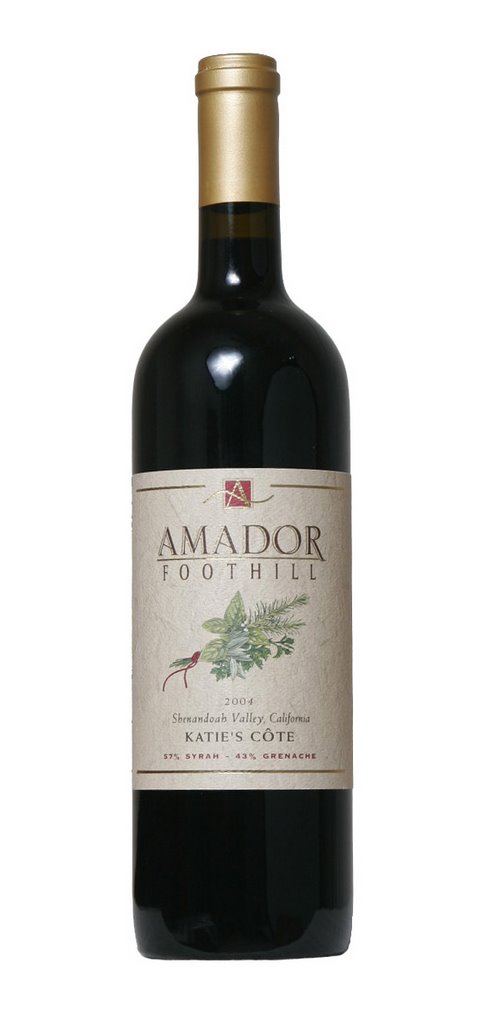
Creekside Cellars has really been hitting some home runs lately with their wine selections. We recently tasted the Amador Foothill Winery 2004 Katie's Cote at their weekly tasting. Located just a couple of hours from here, Amador County is turning into a serious wine producing region, and this wine shows it. A French Rhone-style blend of syrah and grenache grapes, this wine has earthly aromas, dense dark fruit flavors, with a touch of a milk and dark mocha on the finish. Great with lamb or pork. This wine will only improve over the next few years, if you want to hold on to it. A great bargain for $15.99 at Creekside Cellars. Four stars.


How to Taste Wine Part II: Smelling the Wine

Last week I discussed Step 1 of Proper Wine Tasting Technique: Looking at the Wine. If you’re reading this then you survived without becoming a juicy meal for the wine snobs waiting for the slightest faux pas in your technique to eat you alive. By now, I imagine they’re getting pretty hungry, so let’s waste no time getting on with Step II: Smelling the Wine (next week, we’ll actually taste the wine – I promise).

The first step in smelling wine is to swirl the wine in the glass. This allows air to mix with the wine and lets volatile components and alcohol evaporate and release aromas.

Swirling actually takes some skill to do without sloshing wine all over yourself and everyone within ten feet of you. There is, in fact, no easier way to end up on the wine snobs’ dinner menu than to have poor swirling technique.

The trick is to swirl with your shoulder, not your elbow or wrist. Hold the glass by the stem, flat on the table. Don’t hold the glass in the air. Move your shoulders so that the glass moves in circles on the table. Try not to use your elbow and wrist much. Practice this in the privacy of your home with a wine glass filled about halfway with water until you can swirl the wine smoothly and rapidly without sloshing. Practice, practice, practice. That’s the key to survival here. (I honestly can’t believe I spent an entire paragraph on swirling technique. I gotta get a real job.)

Once you’ve given the wine a good swirl, say 5 to 10 seconds worth, it’s time to smell the wine. Don’t do this dainty thing my partner does and put the glass about five inches from your nose and take a tentative sniff. No. Jam that glass up to your nose like it was full of 100% pure Columbian coke and snort like you were suffering serious withdrawal. Breathe deep and really suck those aromas in. I find that inhaling for two to four seconds gives the best take on the wine’s aromas. Closing your eyes while inhaling will make you look like you’re really concentrating on those aromas.

Now we reach the single most critical juncture in surviving wine tasting, and the one that petrifies all wine newbies: describing what the wine smells like. And what does it smell like? What rich and sensuous aromas do you detect? Come on… you can tell me. I won’t hurt you. Cross my heart. Tell me, it smells like wine, doesn’t it?

Ah ha! You worthless little wine cretin! It’s dinnertime!!

Of course wine smells like wine (duh), but most wines also carry overtones of other aromas. Identifying those aromas is the single greatest pleasure in the pathetic life of a wine snob, and that’s why they take it so seriously.

I wish I could tell you that’s it’s easy to detect and describe aromas in wine, but it really takes practice. The best way to start is to compare two wines side-by-side looking for basic types of aromas. The most common types include fruit, floral, spice, vegetal, wood, and earth aromas.

To make it easy on yourself, start with white wines, like a Riesling and a chardonnay. These are two very different kinds of wine and should smell very different. Use the aroma groups above and try to see if you can detect any fruit smells. Riesling often has a strong aroma of green apple and apricot. Chardonnay often has oak and citrus. Any flower-like smells? How about spices?

Don’t worry if you can’t put your finger on what you smell. Just keep smelling. It can take years to develop a finely tuned nose. And don’t worry that you come up with odd things like “pineapple with a dash of motor oil and tartar sauce”. Many of the hip young experts coming on the wine scene today are using exactly these types of weird terms to describe aromas.

Of course, in a wine tasting, surrounded by drooling wine snobs, you don’t have time to practice. You’ve got to get it right the first time. Fortunately, smell is a very personal experience, so as long as you don’t stray too far a field from typical aromas, you should be okay. Here are a few examples of common aromas to guide you.

Light white wines: pineapple, apple, peach, straw, mango
Chardonnay: butter, oak, citrus, vanilla, flint/mineral
Riesling: Green apple, pear, apricot, rose petal, mineral
Burgundy/Pinot Noir: Strawberry, raspberry, cherry, cinnamon, barnyard (swear to God)
Cabernet Sauvignon: Black current, blackberry, mocha, bell pepper, eucalyptus
Syrah: Blackberry, plum, black cherry, black pepper

Drop these terms liberally as you smell the wine using the following time-honored technique:

Swirl. Inhale. Look thoughtful for 4-8 seconds. “I’m getting a bit of blackberry, and…” Swirl again. Inhale again, deeply. Gaze at the ceiling for 6-11 seconds. “…Just a touch of earthiness. Very obvious black pepper.” Quick swirl. Inhale. “And a hint of plum…no make that black cherry.”

Do this right, and you might actually live to taste the wine. In the end, it doesn’t matter so much what exact aromas you can identify. The point of smelling is to get some idea of the character of the wine so that you can enjoy it more. And enjoyment is what it’s all about.